Why Hackers Target Data—and Why QRchat Changes the Equation

Cybersecurity threats continue to evolve as digital communication becomes more widespread. Attackers are constantly searching for valuable targets, and in most cases, those targets are data. Messaging platforms, which store large volumes of user information, are particularly attractive.
Understanding how attacks typically occur is essential for evaluating the security of any communication system. Most attacks are not random—they are strategic and focused on areas where valuable data is concentrated.
QRchat introduces a different model that changes the fundamental assumptions behind these attacks.
Why Hackers Target Messaging Platforms
Messaging platforms store a wide range of data, including conversations, files, and user identities. This data can be used for financial gain, surveillance, or exploitation.
Centralized storage makes these platforms high-value targets. By compromising a single system, attackers can gain access to large amounts of information.
Common Attack Scenarios
There are several common methods used to attack messaging systems.
Server Breaches: Attackers infiltrate centralized servers to access stored data. This is one of the most effective methods because it provides access to large datasets.
Data Exfiltration: Once inside a system, attackers extract sensitive information such as messages and files.
Account Compromise: By gaining access to user accounts, attackers can retrieve data and impersonate users.
All of these attacks depend on one key factor: the existence of stored data.
QRchat’s Structural Advantage
QRchat removes the primary target by eliminating data storage. Messages are not stored on servers, and there is no centralized database.
This means that even if an attacker attempts to target the system, there is no large dataset to extract.
.webp)
No Data, No Target
The absence of stored data fundamentally changes the threat model. Traditional attacks rely on accessing stored information. Without storage, these attacks become significantly less effective.
Additionally, QRchat’s peer-to-peer communication model removes centralized infrastructure, further reducing potential attack points.
From Defense to Elimination
Most security systems are designed to defend against attacks. They add layers of protection to safeguard stored data.
QRchat takes a different approach by eliminating the need for defense in many cases. By removing data, it removes the primary objective of the attacker.
Conclusion
Cybersecurity is often viewed as a constant battle between attackers and defenders. However, changing the structure of a system can shift this balance.
QRchat demonstrates that reducing or eliminating data can significantly decrease risk.
Final Insight: The most effective way to protect data may be to ensure it is never stored in the first place.
Quantarium Homepage - https://quantarium.io/
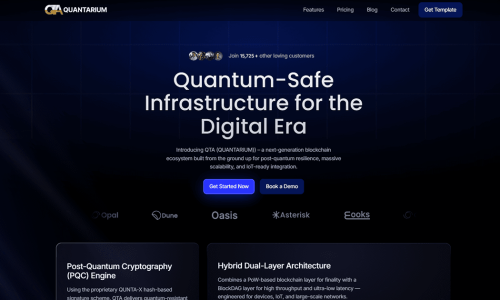
QUANTARIUM - Everything About Quantum Technology
Pantarium(Quantarium) Airdrop Page: Get 50 QTA for free immediately upon sign-up!
Earn additional rewards by sharing your referral code.

QR CHAT: The Beginning of New Communication!
Ringo Homepage!


댓글
댓글 쓰기