The Future of Messaging: Why No-Storage Communication Models Are Emerging

Messaging platforms have evolved significantly over the past decade. What started as simple text communication has transformed into complex ecosystems that include file sharing, media content, payments, and integrated services. While these advancements have improved convenience, they have also introduced new challenges related to data privacy and security.
Most modern messaging applications rely heavily on data collection and storage. Conversations, files, and user interactions are stored on centralized servers, often for extended periods. This approach enables advanced features but also creates long-term risks.
As digital awareness grows, users are becoming more concerned about how their data is handled. This shift in user expectations is driving the emergence of new communication models that prioritize privacy over data retention.
The Problem with Data-Centric Messaging
Traditional messaging platforms are built around data. The more data they collect, the more features they can offer. However, this model creates a dependency on data storage.
Stored data becomes a liability. It must be protected, managed, and secured continuously. Any failure in this process can lead to data breaches, leaks, or misuse.
In addition, centralized storage creates attractive targets for attackers, since large volumes of user data are concentrated in one place.
The Shift Toward Data Minimization
In response to these challenges, a new trend is emerging: data minimization. Instead of collecting and storing as much data as possible, modern systems are beginning to reduce the amount of data they handle.
This approach not only improves privacy but also reduces the complexity of system security. With less data to manage, the potential impact of a breach is significantly lower.

QRchat as a New Model
QRchat represents a clear example of this new direction. It removes data storage from the communication process entirely. Messages are not stored, and there is no persistent record of user activity.
This design aligns with the concept of data minimization and offers a practical solution for privacy-focused communication.
Decentralization and Peer-to-Peer Communication
Another important trend is decentralization. Instead of relying on centralized servers, systems are moving toward distributed models such as peer-to-peer communication.
QRchat uses this approach to enable direct device-to-device communication. This reduces dependency on central infrastructure and limits potential attack points.
What This Means for the Future
The future of messaging is likely to involve a balance between convenience and privacy. While feature-rich platforms will continue to exist, there will be growing demand for tools that prioritize anonymity and data protection.
Applications like QRchat demonstrate that it is possible to build communication systems without relying on data storage.
Conclusion
The evolution of messaging platforms is entering a new phase. Instead of focusing solely on adding features, developers are beginning to rethink the role of data itself.
QRchat represents a shift toward privacy-first design, where the absence of data becomes a key feature rather than a limitation.
Final Insight: The future of communication may not be about storing more data, but about needing less of it.
Quantarium Homepage - https://quantarium.io/
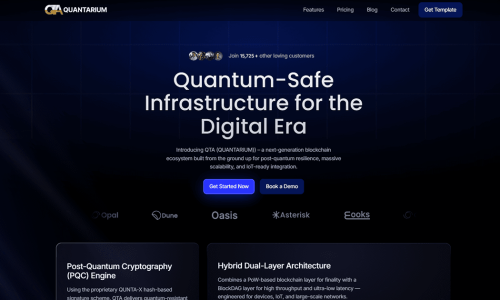
QUANTARIUM - Everything About Quantum Technology
Pantarium(Quantarium) Airdrop Page: Get 50 QTA for free immediately upon sign-up!
Earn additional rewards by sharing your referral code.

QR CHAT: The Beginning of New Communication!
Ringo Homepage!


댓글
댓글 쓰기