The Future of Messaging: Will Privacy Become the Standard?

Digital communication has evolved rapidly over the past two decades. From simple text messages to advanced multimedia communication, messaging platforms have become an essential part of everyday life.
However, as communication technology continues to grow, so do concerns about privacy and data security.
This has led to an important question: What will the future of messaging look like?
The Evolution of Messaging Platforms
Early messaging systems were simple and limited. Over time, they evolved into complex platforms that support images, videos, voice calls, and group communication.
At the same time, these platforms began collecting more user data to improve functionality and connectivity.
While this made messaging more convenient, it also introduced new privacy concerns.
The Problem of Data Collection
Many modern messaging applications rely on collecting user data.
This may include:
- Phone numbers
- Email addresses
- Contact lists
- Usage activity
While this data helps improve user experience, it also creates potential risks.
If data is stored in centralized systems, it may become a target for security breaches or unauthorized access.
The Shift Toward Privacy
As users become more aware of digital privacy issues, there is a growing demand for communication platforms that minimize data collection.
Users are increasingly interested in messaging systems that:
- Do not require personal information
- Limit data storage
- Provide secure communication
Anonymous Communication
One of the key trends in modern messaging is anonymous communication.
Instead of linking accounts to real-world identity, some platforms allow users to communicate using nicknames or temporary identifiers.
This approach helps reduce the exposure of personal information.
Decentralized Communication Structures
Another important trend is the move toward decentralized communication.
Technologies such as peer-to-peer (P2P) communication reduce reliance on centralized servers.
This can help minimize data storage and improve user control over communication.

QR-Based Communication
QR code-based communication is also emerging as a simple and privacy-friendly method of connecting users.
By scanning a QR code, users can establish connections instantly without sharing personal data.
The Role of QR Chat
QR Chat represents a combination of these trends.
It uses nickname-based login, QR code connection, and P2P communication to create a messaging environment that focuses on privacy and simplicity.
The Future of Digital Communication
As digital technology continues to evolve, privacy may become one of the most important features of communication platforms.
Messaging systems that minimize data collection and prioritize user control may become more common.
For users who value privacy, new communication models such as QR-based and P2P messaging may play an increasingly important role in the future.
Quantarium Homepage - https://quantarium.io/
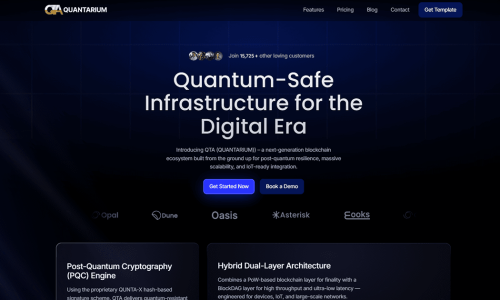
QUANTARIUM - Everything About Quantum Technology
Pantarium(Quantarium) Airdrop Page: Get 50 QTA for free immediately upon sign-up!
Earn additional rewards by sharing your referral code.

QR CHAT: The Beginning of New Communication!
Ringo Homepage!


댓글
댓글 쓰기