How Secure Is Post-Quantum Cryptography?
.jpg)
As quantum computing continues to advance, cybersecurity researchers are preparing for a future in which traditional cryptographic systems may face new challenges. Many current encryption systems used in the internet and blockchain networks were designed for classical computers.
Because of this, researchers have been developing a new generation of cryptographic algorithms known as Post-Quantum Cryptography (PQC).
PQC refers to encryption methods designed to remain secure even if large-scale quantum computers become available.
Why Traditional Cryptography May Not Be Enough
Modern digital systems rely on cryptographic algorithms such as RSA and elliptic curve cryptography (ECC). These systems are extremely secure against classical computing attacks.
However, theoretical research in quantum computing suggests that algorithms such as Shor's Algorithm could solve the mathematical problems behind these systems much faster.
Although practical quantum attacks are still far in the future, many governments and technology companies are already preparing for this possibility.
What Makes PQC Different?
Unlike traditional cryptographic systems, PQC algorithms rely on mathematical problems that are believed to be resistant to both classical and quantum computing attacks.
Several different types of post-quantum cryptographic systems are currently being studied.
- Lattice-based cryptography
- Hash-based cryptography
- Code-based cryptography
- Multivariate cryptography
Among these, lattice-based cryptography is widely considered one of the most promising candidates for long-term digital security.
Lattice-Based Cryptography
Lattice-based cryptography relies on complex mathematical lattice structures. These structures create problems that are extremely difficult for both classical and quantum computers to solve efficiently.
Because of these properties, lattice-based algorithms have become a major focus of post-quantum cryptography research.
.jpg)
The Role of PQC in Blockchain Security
Blockchain systems depend heavily on cryptographic signatures to secure digital assets. If traditional cryptographic systems were weakened by future computing advances, blockchain security could face significant challenges.
Integrating post-quantum cryptographic algorithms into blockchain networks may provide a path toward long-term security.
Quantarium and Post-Quantum Blockchain Infrastructure
Some blockchain platforms are exploring the integration of PQC technologies at the network architecture level.
The Quantarium mainnet is designed with this approach in mind. By incorporating quantum-resistant cryptographic concepts, Quantarium aims to create a blockchain infrastructure that remains secure in future computing environments.
As quantum computing research continues to evolve, the development of quantum-resistant blockchain technology may become increasingly important for protecting digital assets.
Quantarium Homepage - https://quantarium.io/
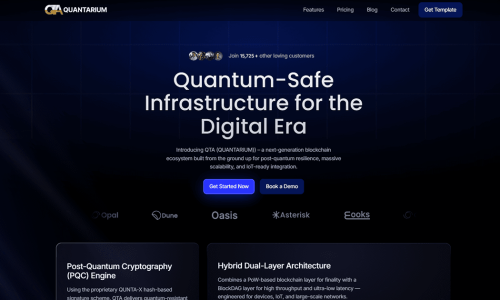
QUANTARIUM - Everything About Quantum Technology
Pantarium(Quantarium) Airdrop Page: Get 50 QTA for free immediately upon sign-up!
Earn additional rewards by sharing your referral code.

QR CHAT: The Beginning of New Communication!
Ringo Homepage!


댓글
댓글 쓰기