How QRchat Works: The Technology Behind Fast and Secure Messaging

Modern messaging applications are built on complex infrastructures that rely heavily on centralized servers. While this architecture allows for scalability and feature-rich environments, it also introduces latency, data storage concerns, and security risks.
QRchat takes a different approach by simplifying the communication model. Instead of relying on centralized systems, it uses a direct connection between devices, combined with a no-storage policy. This combination changes how data flows and how security is achieved.
Traditional Messaging Architecture
Most messaging platforms follow a client-server model. In this structure, messages are sent from a user's device to a central server, where they are processed, stored, and then delivered to the recipient.
This architecture enables features such as message history, synchronization, and multi-device access. However, it also creates dependency on server performance and introduces delays during peak usage.
More importantly, this model requires data storage. Messages are often retained in databases, backups, or logs, which increases the risk of data exposure.
Limitations of Server-Based Systems
Server-based communication introduces several limitations. First, latency can increase as traffic grows, since all data must pass through centralized infrastructure. Second, the system becomes vulnerable to bottlenecks and outages.
From a security perspective, centralized storage creates a high-value target. Attackers often focus on servers because they contain large amounts of user data.
Even with encryption, stored data can still be exposed if the system is compromised.
QRchat’s Peer-to-Peer Model
QRchat removes the central server from the communication process. Instead, it uses a peer-to-peer (P2P) model, where devices connect directly to each other.
This approach eliminates the need for intermediate processing and significantly reduces latency. Messages travel directly from sender to receiver, resulting in faster communication.

Real-Time Data Flow Without Storage
In QRchat, data follows a simple lifecycle: creation, transmission, and immediate disappearance. There is no persistent storage at any stage of the process.
This means that once the communication session ends, all data is effectively removed from the system. There are no logs, backups, or historical records.
This design not only improves performance but also enhances privacy.
Security Through Structural Design
The security of QRchat is not based on adding more layers of protection. Instead, it is achieved by reducing the number of components involved in the system.
By eliminating centralized storage and reducing attack surfaces, QRchat minimizes potential vulnerabilities. There is no central database to target and no stored data to steal.
This represents a shift from defensive security to structural security.
Conclusion
QRchat demonstrates how changes in system architecture can improve both performance and security. By using peer-to-peer communication and removing data storage, it creates a messaging environment that is fast, simple, and secure.
Final Insight: QRchat achieves speed and security not by adding complexity, but by removing unnecessary components.
Quantarium Homepage - https://quantarium.io/
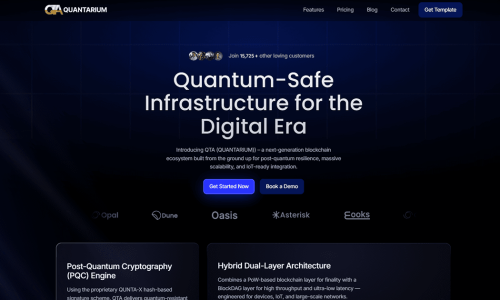
QUANTARIUM - Everything About Quantum Technology
Pantarium(Quantarium) Airdrop Page: Get 50 QTA for free immediately upon sign-up!
Earn additional rewards by sharing your referral code.

QR CHAT: The Beginning of New Communication!
Ringo Homepage!


댓글
댓글 쓰기