Why Quantum Computers Can't Crack Quantarium: The Secret of PQC
Yesterday, we discussed the "Quantum Time Bomb." Today, let’s talk about the shield. While traditional encryption is like a lock that a quantum computer can easily pick, Post-Quantum Cryptography (PQC) is like a maze that is impossible to navigate—even for the world’s fastest quantum machine.

1. Traditional Encryption vs. PQC

Current encryption (RSA, ECC) relies on the difficulty of factoring large numbers. A quantum computer using "Shor’s Algorithm" can solve this in seconds. However, Quantarium uses Lattice-based Cryptography (a type of PQC). Think of it as a complex multi-dimensional puzzle that remains unsolvable regardless of computing power.
2. Native Security, Not an Add-on
2. Native Security, Not an Add-on
Many legacy blockchains are trying to "patch" their security. But patching a 15-year-old foundation is risky and inefficient. Quantarium was built from the ground up with PQC integrated into its Genesis Block. We didn't just add a lock; we built a fortress with quantum-resistant stones.
3. Speed Meets Security
3. Speed Meets Security
A common myth is that PQC is slow. Quantarium proves this wrong. Quantarium mainnet architecture is optimized to handle high-speed transactions without compromising the heavy-duty security required for the quantum era. It’s the perfect balance of performance and protection.

Conclusion

Quantum computers are coming, but you don't need to fear them. By choosing a network that speaks the language of the future, you are securing your assets in a vault that hasn't been built to be broken. Welcome to the era of Quantarium.
"Deep Dive into Quantum-Resistant Technology:"
IBM: Why We Need Quantum-Safe Security Now Quantarium Homepage - https://quantarium.io/
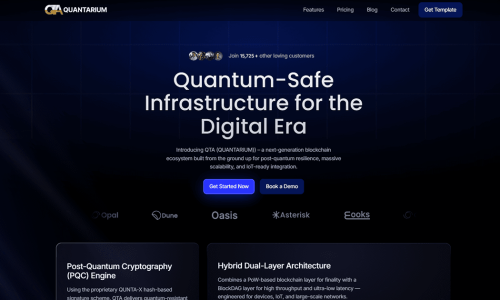
QUANTARIUM - Everything About Quantum Technology
Pantarium(Quantarium) Airdrop Page: Get 50 QTA for free immediately upon sign-up!
Earn additional rewards by sharing your referral code.

QR CHAT: The Beginning of New Communication!
Ringo Homepage!


댓글
댓글 쓰기