When Immutability Becomes a Risk: Blockchain Security in the Quantum Era
.webp)
Immutability is often described as one of the greatest strengths of blockchain technology. Once a transaction is recorded on the blockchain, it cannot be easily changed or removed. This permanent record helps create trust in decentralized systems.
However, the same feature that makes blockchain powerful can also introduce long-term security challenges, especially when considering the future impact of quantum computing.
The Strength of Immutability
Blockchain systems rely on distributed ledgers where every transaction is verified and stored across many nodes. Once a block is confirmed, altering the historical data becomes extremely difficult.
This immutability ensures transparency and prevents manipulation of financial records. For cryptocurrencies, digital assets, and decentralized applications, this property is fundamental.
The Hidden Risk of Permanent Data
While immutability protects data integrity, it also means that cryptographic assumptions made today will remain embedded in the blockchain forever.
If encryption methods used today become weaker in the future, the historical records stored on blockchains may become vulnerable to new forms of analysis.
This is where the concept of “Harvest Now, Decrypt Later” becomes relevant. Attackers may collect encrypted data today and attempt to decrypt it later when stronger technology becomes available.
Quantum Computing and Cryptographic Change
Quantum computers operate differently from classical computers. Certain quantum algorithms have the theoretical potential to solve mathematical problems that form the foundation of many modern cryptographic systems.
Although large-scale quantum attacks are not currently practical, researchers are actively preparing for the possibility that cryptographic standards will evolve.
Why Long-Term Security Planning Matters
Because blockchain data is permanent, security strategies must consider very long time horizons. A system that is secure today must remain secure decades into the future.
This is why many researchers are exploring Post-Quantum Cryptography (PQC), which aims to create encryption systems resistant to quantum computing attacks.
The Importance of Future-Ready Blockchain Infrastructure
As blockchain technology becomes more deeply integrated into financial systems, digital identity platforms, and decentralized internet infrastructure, long-term security planning becomes essential.
Projects that consider quantum-resistant design may help ensure that blockchain networks remain trustworthy even as computing technology evolves.

FAQ
What is blockchain immutability?
It refers to the property that blockchain data cannot be easily altered once recorded.
Why could immutability become a risk?
Because cryptographic methods used today are permanently embedded in the historical data. If those methods weaken in the future, the old data cannot be changed.
What role does quantum computing play?
Quantum computing may influence how certain cryptographic systems are evaluated in the future.
Quantarium Homepage - https://quantarium.io/
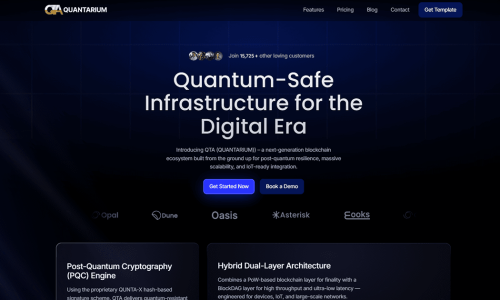
QUANTARIUM - Everything About Quantum Technology
Pantarium(Quantarium) Airdrop Page: Get 50 QTA for free immediately upon sign-up!
Earn additional rewards by sharing your referral code.

QR CHAT: The Beginning of New Communication!
Ringo Homepage!


댓글
댓글 쓰기