Privacy-First Messaging: How Zero-Data Systems Actually Work
Introduction: Why “Private Messaging” Is No Longer Enough
Many messaging apps claim to be private. They advertise end-to-end encryption and secure chats.
However, recent data leaks and metadata abuse reveal a deeper issue: encryption alone does not guarantee privacy.
True privacy requires something more radical—zero-data system design.

What Is Privacy-First Messaging?
Privacy-first messaging minimizes data collection at every layer:
- No personal information at signup
- No message storage on servers
- No metadata retention
The goal is simple: there should be nothing valuable to steal.
Privacy-first messaging minimizes data collection at every layer:
- No personal information at signup
- No message storage on servers
- No metadata retention
The goal is simple: there should be nothing valuable to steal.
The Problem with Traditional Encrypted Messengers
Even encrypted apps often store:
- User identities
- Contact graphs
- Message timestamps
- IP-based metadata
This information can be enough to:
- Track relationships
- Reconstruct behavior
- Enable surveillance
Encryption protects content—but metadata exposes context.
What Is a Zero-Data System?
A zero-data system is designed so that:
- Servers cannot identify users
- Messages are not logged or archived
- Session data is ephemeral
A zero-data system is designed so that:
- Servers cannot identify users
- Messages are not logged or archived
- Session data is ephemeral

Even if servers are compromised, attackers gain nothing meaningful.
How Zero-Data Messaging Works (Step by Step)
- Users generate keys locally
- Servers act only as temporary routers
- Messages are delivered and destroyed
- No logs are retained
- Users generate keys locally
- Servers act only as temporary routers
- Messages are delivered and destroyed
- No logs are retained
Privacy is enforced by architecture, not policy.
- Key advantages:
- No centralized data honeypots
- No long-term metadata
- Minimal attack surface
Attackers cannot decrypt what they cannot access—and cannot analyze what does not exist.
Real-World Use Cases
Zero-data messaging is ideal for:
- Journalists and activists
- Corporate internal communications
- Privacy-sensitive marketplaces
- Decentralized ecosystems
Zero-data messaging is ideal for:
- Journalists and activists
- Corporate internal communications
- Privacy-sensitive marketplaces
- Decentralized ecosystems
Zero-data systems may sacrifice:
- Convenience (no chat history sync)
- Analytics
- Personalized features
However, for privacy-critical use cases, this trade-off is intentional.
FAQ
- Is zero-data the same as encryption?
No. Encryption protects data. Zero-data eliminates stored data.
- Can law enforcement access messages?
If data is never stored, there is nothing to retrieve.
- Is zero-data the same as encryption?
No. Encryption protects data. Zero-data eliminates stored data.
- Can law enforcement access messages?
If data is never stored, there is nothing to retrieve.
Conclusion: Privacy by Design, Not Promise
Privacy-first messaging does not ask users to trust companies.
It removes the need for trust entirely.
If data does not exist, it cannot be abused.
Privacy-first messaging does not ask users to trust companies.
It removes the need for trust entirely.
If data does not exist, it cannot be abused.
Quantarium Homepage - https://quantarium.io/
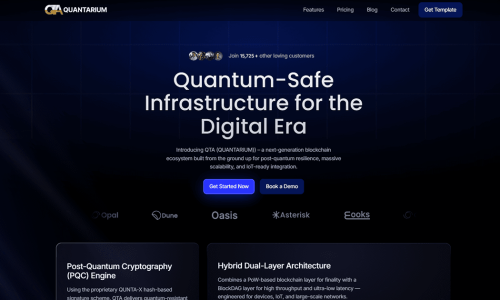
QUANTARIUM - Everything About Quantum Technology
Pantarium(Quantarium) Airdrop Page: Get 50 QTA for free immediately upon sign-up!
Earn additional rewards by sharing your referral code.

QR CHAT: The Beginning of New Communication!
Ringo Homepage!


댓글
댓글 쓰기