Harvest Now, Decrypt Later: The Hidden Quantum Threat to Blockchain
As quantum computing research accelerates, cybersecurity experts are paying increasing attention to a strategy known as Harvest Now, Decrypt Later.
The concept is simple but powerful. Attackers collect encrypted data today even if they cannot decrypt it immediately. They store this information with the expectation that future computing breakthroughs—particularly quantum computers—may allow them to break the encryption later.

Why This Strategy Matters for Blockchain
Unlike many traditional databases, blockchain systems are public and transparent. Transaction data, wallet addresses, and digital signatures are permanently visible on the ledger.
This transparency is a strength for decentralization. However, it also means that large amounts of cryptographic data are publicly available for anyone to collect.
If future quantum computers become capable of breaking classical cryptographic algorithms, historical blockchain data could become a valuable target.
Public Key Exposure and Long-Term Risk
Many blockchain systems rely on public key cryptography such as Elliptic Curve Digital Signature Algorithms (ECDSA). These systems are secure today because classical computers cannot efficiently solve the mathematical problems behind them.
Quantum algorithms such as Shor's Algorithm could change that assumption. In theory, sufficiently powerful quantum computers may be able to derive private keys from public keys.
If that becomes possible, attackers who previously harvested blockchain data could attempt to reconstruct historical keys.
Why Waiting Is Risky
Some blockchain projects argue that cryptography can simply be upgraded later once quantum threats become real. While upgrades are possible, they cannot erase historical cryptographic exposure.
Blockchain immutability ensures that past transactions remain visible forever. If those transactions rely on cryptographic assumptions that later become weak, the exposure cannot be removed.

The Role of Post-Quantum Cryptography
Post-Quantum Cryptography (PQC) refers to cryptographic systems designed to resist both classical and quantum attacks. These systems are currently being standardized by organizations such as the U.S. National Institute of Standards and Technology (NIST).
The goal is to create encryption methods that remain secure even if large-scale quantum computers become practical.
Why Quantarium Is Relevant
Quantarium approaches blockchain security from a long-term perspective. Instead of assuming that current cryptographic systems will remain safe indefinitely, the design philosophy considers the possibility that future computing environments may be dramatically more powerful.
By aligning blockchain infrastructure with post-quantum security principles, Quantarium attempts to address risks that may emerge years or even decades from now.
As blockchain networks increasingly become part of global digital infrastructure, designing systems with long-term security in mind may become one of the most important challenges in the industry.
Quantarium Homepage - https://quantarium.io/
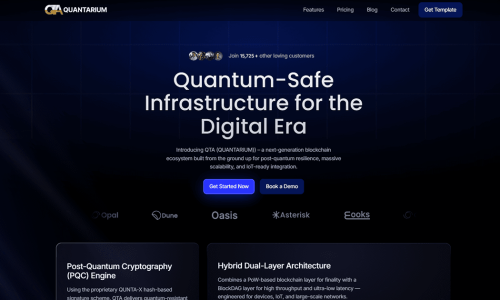
QUANTARIUM - Everything About Quantum Technology
Pantarium(Quantarium) Airdrop Page: Get 50 QTA for free immediately upon sign-up!
Earn additional rewards by sharing your referral code.

QR CHAT: The Beginning of New Communication!
Ringo Homepage!


댓글
댓글 쓰기